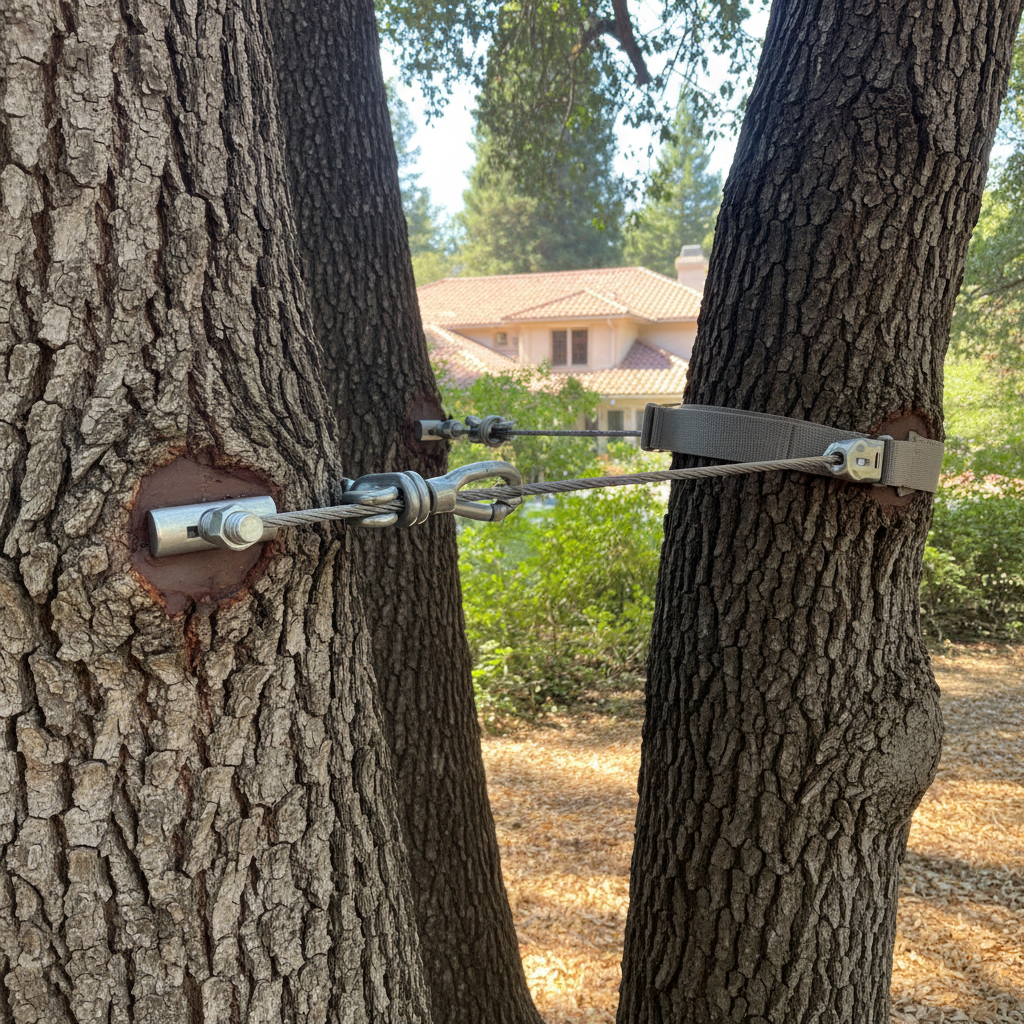
You've got a beautiful, mature tree on your property, maybe one of those majestic oaks or redwoods that really define Atherton's landscape. But sometimes, these big guys can develop issues – weak limbs, split trunks, or just an awkward lean that makes you nervous every time the wind picks up. That's where tree cabling and bracing come in.
It's not about strapping a tree up like a broken leg, though that's kind of the idea. It's about providing supplemental support to keep a structurally compromised tree safe and healthy, often preventing a full removal. I've seen plenty of trees saved this way, and it's a smart investment if you love your trees.
What's the Deal with Cabling and Bracing?
Think of it as an insurance policy for your tree. Cabling involves installing high-strength steel cables between weak branches or leaders to limit their movement and reduce stress. Bracing uses threaded rods through a weak or split crotch to provide more rigid support. Often, we use both together for the best results.
The goal isn't to make the tree completely rigid. Trees need to sway a bit to develop strong wood. The idea is to reduce the excessive movement that could lead to failure, especially during our winter storms or those gusty Santa Ana winds we sometimes get.
Before You Do Anything: Assess Your Tree
This isn't a DIY project for most homeowners, plain and simple. You can't just run down to Home Depot, grab some rope, and call it a day. Improper cabling or bracing can actually do more harm than good, creating new weak points or girdling the tree.
- Look for red flags: Are there V-shaped crotches where branches meet the trunk? Is there a crack running down a main leader? Does a large branch extend way out, looking heavy and unsupported? These are all signs that your tree might need help.
- Consider the species: Some trees are more prone to structural issues. Liquidambars, for instance, are notorious for developing weak, co-dominant stems that can split. Knowing your tree type can give you a heads-up.
- Think about the targets: What's under that potentially failing branch? Your house? Your car? Your kid's swing set? The higher the risk, the more urgent it is to get a professional opinion.
What you can do yourself is observe. Take pictures, note down what concerns you. But when it comes to deciding if cabling/bracing is right, and how to do it, you absolutely need a certified arborist.
During the Project: What a Pro Does
When you call in a company like Top Notch Tree, here’s generally what we’ll do:
- Thorough Inspection: We'll climb the tree, assess its overall health, structural integrity, and identify the specific points of weakness. We're looking at the whole picture, not just the obvious crack.
- System Design: Based on the tree's size, species, and the nature of the defect, we'll design a custom cabling and/or bracing system. This isn't one-size-fits-all. We'll decide on the type of cable (extra high strength steel is common), the hardware (thimbles, dead-end grips, eye bolts), and the exact placement.
- Installation: This involves drilling into the branches or trunk (carefully, at specific angles), installing the hardware, and tensioning the cables. It's precise work. We use specialized tools and techniques to minimize damage to the tree and ensure the system is effective and safe. We'll often do some corrective pruning at the same time to reduce weight on the compromised limbs.
- Safety First: We're working at height, often with heavy equipment. A professional crew has the training, insurance, and gear to do this safely for themselves and your property.
You'll want to make sure the arborist is ISA Certified and has experience with these types of structural supports. Ask for references, check their reviews. Don't just go with the cheapest bid; this is about the long-term health and safety of your tree.
After the Installation: Ongoing Care
Once the cabling or bracing is in place, your job isn't entirely done. Think of it like getting braces on your teeth – you still need to go to the dentist for check-ups.
- Regular Inspections: I recommend having your arborist re-inspect the system every 3-5 years. Cables can stretch, hardware can loosen, and the tree itself will continue to grow. We need to make sure the system is still doing its job and isn't causing any new issues like girdling.
- Look for changes: Keep an eye on the tree yourself. If you notice a cable looks slack, or a branch seems to be moving more than it should, give us a call.
- Don't forget general tree care: Cabling and bracing address a structural issue, but they don't fix underlying health problems. Continue with good watering practices, especially during dry spells, and regular pruning to maintain overall tree health. A healthy tree is a strong tree.
Cabling and bracing can extend the life of a valuable tree for decades, keeping it a beautiful, safe part of your Atherton landscape. It's a specialized service, so don't hesitate to reach out to a pro if you think your tree needs a little extra support. We're here to help you keep your trees in top shape.